Another year, another 12 months of not posting. So, here’s the whole year in one post. I watched 192 films released in the U.S. during 2015 (with 33 of those being in an actual movie theatre). So, like usual, there is a top ten and a secondary top ten of movies (I could probably make a third this year). This list is based on having seen these films only once (with the exception of one that I happened to see twice). This list is always presented in alphabetical order, because most films have no basis in comparison and ranking movies is both difficult and worthless. I would change some of these around (again) given the chance, but the year is over now so I can’t. The “rules” are that the movie had to be released theatrically in the U.S. sometime in 2015 for the first time. I did not include documentaries because I haven’t seen enough to comparatively make a list (unless asked) and I do not include animation because of the same, in addition to my perhaps illogical bias toward preferring to see human actors act (Anomalisa and Inside Out are the only animated features I saw this year and you probably don’t need me to tell you how many other lists they are on).
My Top Ten:
 Clouds of Sils Maria [France/Germany/Switzerland]
This is a movie about acting; It is about the process of creating art(ifice). Olivier Assayas takes the less controlled meta-ness of something like his Irma Vep and melds this with his more recent, practiced takes on allowing the actors to build their characters onscreen. The three women featured here all play ‘types’, but they also play what feels like real people (or more specifically real people projecting a persona or performing a role). As Binoche’s character, now an aging movie star, prepares to take on the older role in the restaging of a play she became famous for in the younger role, we see her doubts, her fears, her vanity. As Stewart plays her personal assistant and confidante we see her reverence, her inexperienced uncertainty, her stoic disapproval of certain choices by a woman she knows perhaps too well. As Moretz enters the picture, we see her youthful naiveté, her knowing arrogance, her unique career situation. This film has a lot to say without explaining it to you. It prefers to give you time and space to think about what you want to see. While this was released in parts of Europe in 2014 (for which Stewart was the first American to ever win a Cesar), I include it here for our delayed gratification.
 Diary of a Teenage Girl [USA]
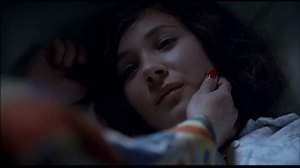
Forgive the ironic adjective, but this is a ballsy debut film by Marielle Heller. It exists in a cultural world our time has forgotten or maybe never existed for anyone but the people in the story. But I have a feeling that this film brings out a whole lot of feelings in audiences contemporary to San Francisco in the ’70s. To say that it’s “refreshing” to see a film that deals with teenage, female sexuality honestly, and at (many) times intentionally uncomfortable ways, would be a disservice to its uniqueness in the history of American film (yeah, that sounds like hyperbole but it actually isn’t). Based on the quasi-autobiographical graphic novel, the film amazingly melds its sections of fantasy and emerging reality with its actors. Bel Powley commands the titular role with a fierce exploration beyond what one might expect from the material, providing just the right amount of insular distance. Compared to other “teen movies” about teens this year (Me & Earl and the Dying Girl or Ten Thousand Saints come to mind), this is not comparatively too distanced in its reflectiveness (meaning it doesn’t feel like adults are retrospectively crafting control of the emotional arc of the story). This film has an authentic energy to it that speaks to the process of discovery as a teenager; where you may think you know what you feel but come to learn in your actual maturity that it wasn’t entirely the way you thought it was or supposed to be.
 Ex Machina [UK]
The sci-fi lover in me rates this movie slightly higher than it may deserve. Which isn’t to say it’s undeserving of heaps of praise. It is a tightly written, intimate chamber drama with a shiny, cool cinematography to match its tone. Oscar Isaac’s character is devilishly Kubrickian in his human machinations. Robots are cool, but consciousness is king (or rather, queen). Alicia Vikander should get an award for her excellent ubiquity this year (with two other performances central to the success of their pictures in Testament of Youth and her sure to be Oscar-nominated portrayal in The Danish Girl; I didn’t see The Man from U.N.C.L.E. but I can only assume that wasn’t her fault). Those who may be disappointed with the ending should check the title and rethink their conception of what was supposed to be going on in the first place. “A thinking person’s sci-fi” is such a clichéd phrase, especially in terms of cinema, but let’s have more of this and less of ones based on comic books and classic TV shows, please, yes?
 It Follows [USA]
This is a teen horror movie that forgoes the past twenty years of ironic distance and gore heavy style-over-substance to take you straight into its strong concept and expertly constructed atmosphere. Yes, it’s a genre film, so there must be a strong suspension of disbelief (especially about the choices made by certain characters). Yet, the “reality” displayed here is, like most horror, only emotionally real in its choose-your-own-interpretative metaphor. All the elements of a good horror film are here, including, perhaps above all else, an engagingly memorable score. Aside for maybe the micro-budget, single-camera Creep by Patrick Brice and Mark Duplass, this is by far the best horror film of the year (if you don’t count the brutal ‘gothic western’ Bone Tomahawk or the auteur pastiche dream poem of A Girl Walks Home Alone at Night).
 The Lobster [Greece/Ireland/UK/France/Netherlands/USA]
I would watch anything by this Greek writer-director team after Dogtooth (That film is an undeniable masterpiece). While this film, their third but first in English, doesn’t quite maintain its momentum as well, it is a deft piece of absurdity that cannot be mistaken for any other film(maker). It’s best to go in without any notion of the “plot” (click on the title if you think you have to know). I had forgot what I knew of it by the time I sat down to watch this and I’m glad I did. No preconceptions. Suffice to say if you enjoy the sublime surrealism of Bunuel or the seeming lack of rules that come with theatre of the absurd, you might enjoy this. I was initially disappointed by the ending (no spoilers), but then I quickly realized the frame in which it was told. Some will likely scoff at the whole concept or its execution, but the movie finds a rare balance between distanced absurdity and innocent emotion. And I literally, unexpectedly laughed a couple of times harder than any other film this year.
 Mistress America [USA/Brazil]
Noam Baumbach is not for everyone. In fact, I’m not sure if he’s even for me. I’ve found his other feature from this year, While We’re Young, to be an interesting concept, but ultimately a bit too annoying for my taste (though part of this is the casting, I guess). Actually, most of his movies are annoying (except the excellent Rohmeresque Margot at the Wedding, which is annoying in all the right places). This one, co-written and starring his current muse, Greta Gerwig, is like if Lena Dunham’s Girls was written by Whit Stillman on a more than steady diet of 1930’s screwball comedies(?). It’s a fast talking coming of age film with a heartful of hilarity. Thank you to Mmes. Gerwig and Kirke for molding the usual snobbery into enjoyable comedy.
 Phoenix [Germany/Poland]
This has been a favorite since early in the year. In Germany during WWII, a woman (Nina Hoss, director Petzold’s continued muse; recently seen on Homeland) is presumed dead after being sent off to a concentration camp. At the beginning of the film, when she returns home from said presumed death with a surgically reconstructed face, her husband hires her to impersonate his wife because of a seeming resemblance. Yeah, I know that may sound far-fetched, but it’s a movie, ok? And it might ultimately be my favorite of the year. ‘It’s like if Hitchcock and Fassbinder had a baby’. Yeah, I know, that should be on the poster, right?
 The Revenant [USA]
This is the most recent one on the list that I’ve seen, but I don’t think it’s too early to say that it is a great film. Period. It is an action-adventure historical fiction spiritual western. It is rife with metaphor while being spectacular enough for popcorn munchers to just marvel at its awe-inspiringly directed shot setups, daring staging, and insane camera work. I think this is the type of film some people expected Terrence Malick to still be making (that may sound comparatively disingenous but I mean it as a compliment). DiCaprio commits to this almost purely physical performance in a way that simply cannot be denied. Iñárritu and Lubeski prove yet again that they are a force to be reckoned with in Cinema. Just remember to breathe.
 Steve Jobs [USA]
I’ll start by saying that I probably couldn’t care less that this movie is about Steve Jobs. This is an amazingly written piece of theatre performed by some great actors (AND Seth Rogen). This is a 122 minute movie with a 190 page script (scripts are, on average, 1 minute per page). So, there’s A LOT of dialogue that just so happens to be great. Michael Fassbender is electrifying as a man who literally has no time for anyone who is unable to understand the vision of what’s going on inside his head. What could be a schmaltzy focus on his relationship with his daughter is used well to balance a parallel emotional growth to his technological growth. The ‘ending’ almost bumps this off my top ten list, but the direction and editing that sustains the pace of this film is simply marvelous. Each of the three acts of this film was rehearsed like a stage play and it shows in every possible positive way. I can’t imagine how David Fincher and Christian Bale would have done this, but, even with their talent, I’m fairly certain it wouldn’t have been as good.
 Youth [Italy/France/Switzerland/UK]
Paolo Sorrentino makes another film in English with an extraordinary group of lead actors for this meditation on age, desire, and the passing of time. While less formally obtuse than his previous The Great Beauty, it is a film full of sound and image that concentrates on the music of moments over narrative. This movie isn’t really about plot (Michael Caine and Harvey Keitel hang around on vacation at a Swiss mountain resort, listen to music, talk to people like Paul Dano, and generally meditate on life past, present, and future); this movie is about feeling stuff. And if that doesn’t sound good to you, then you’ll miss out on what is objectively one of the best movies of the year (clearly in my top 3, if I had to rank these). I normally don’t recommend watching previews, but check out this one if you’re not already sold. It manages to convey the mood and theme without giving too much away (if that even matters). I would watch this again right now. If I have any criticisms, this skews a bit male-centric so Rachel Weisz is noticeably underused. I would say the same for Jane Fonda, despite a probable Oscar nomination, but the brevity of her performance is intentional. Some will discount the film for only providing fragments, suggesting that these fragments make the film somehow less complete or accomplished. While that may be a valid opinion, the film is aware of it. “Emotions are all we’ve got”; “Horror or Desire”. Your choice.
And a secondary ten:
 Chi-Raq [USA]
Spike Lee adapts Lysistrata (with Kevin Wilmott) to some exaggerated, modern day version of Englewood Chicago (the uproar over his being unfamiliar with the actual Chicago comes from those that don’t realize that most of Lee’s films are set in some sort of heightened reality or outright fantasyland). It’s not a musical, but the rhymed verse in places brings it back to Lee’s own School Daze (where he really developed his consistent style even if his storytelling has varied over the years). This film has its share of problems (too long in places; plot confused in others) and the politics are bound to blind people on either side of the issues, but this is a fairly funny movie about violence without showing much violence. This is a satire that attempts to effectively use both Nick Cannon and Wesley Snipes (that effort alone is worthy of praise). However, it is the actresses here that steal the show, as they should. Suspend your disbelief and let the polemic flow through you, this is an irreverent attempt at stirring up Cinematic trouble and an interesting choice by Amazon to be one of their first major Internet feature properties (though it did have an initial, limited theatrical run). Creative freedom does wonders for the career of artists like Lee. Even if the end result isn’t great, it can’t simply be labeled as ‘okay’. At the very least it proves he hasn’t completely gone off the deep end (as he appeared to do early in the year with his student film-like remake of Ganja & Hess).
 The Duke of Burgundy [UK/Hungary]
There’s something to be said for making the aberrant monotonous. If you are familiar with filmmakers like Alain Robbe-Grillet, Jean Rollin, or even Jess Franco, then I would say keep reading. If you wanted to like Fifty Shades of Grey for non-zeitgeisty, non-normative reasons, there’s a minuscule chance you could possibly be maybe interested in this (note the abundance of qualifiers in this sentence). For most, recommending this to you is likely to either weird you out or bore you to death (or both). This film is slow and repetitious, but it has a point in its tedium. The utterly cinematic construction shows off a filmmaker both still learning and loving his craft. The jarringly oneiric title sequence and the choice of pop-neoclassical score make this a worthy experience by itself. To find a film that is equally, successfully unique in its approach to image and sound these days is few and far between, even if this one is about 20 minutes longer than a masterpiece. “Be Nasty!”
 Kreuzweg (Stations of the Cross) [Germany/France]
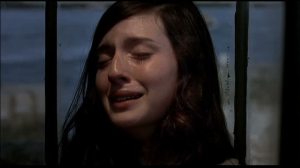
Don’t ask me why there are so many German movies on this list (see below). It’s a coincidence that will probably never happen again. However, this one is the most formally rigid of all. It is divided into 14 segments labeled for each Stations of the Cross, many of which are noticeably filmed in a long uninterrupted, mostly static takes. The film centers on a present-day teenage girl, from a strict, pre-Vatican II German Catholic family. She is taught to sacrifice in the every day for God and so she does. It is a story of both transcendent martyrdom and child abuse – which one you lean toward depends on your own station in life. For my non-religious eyes, it is confusing whether this is intended as a filpside or peer to something like Ordet or Breaking the Waves in its magnificence. (Definitely more engaging than the more recent Stellet Licht for me). A literally? divine performance by the young female lead.
 Mad Max: Fury Road [Australia/USA]
This is obviously the best action movie of the year, right? But does it deserve to be “elevated” to a best of the year list? Of course it does. I liked this a lot, but I personally didn’t like it as much as the other ten above probably because it’s an action movie (not enough character or dialogue for me), so that’s why it’s down here. Objectively, it should be up top. It’s my list, though, so whatever. Much has been made of its ‘feminist’ leanings, which is interesting, and perhaps laughable culturally, because all the film does is display a world where everyone has to fend for themselves equally. While it is sad that it takes an Oscar winning actress and a cast of women that pass the Bechdel test in their every scene to spark this interest, gender pertains to the story most crucially in the sense that it is female enslavement (for their baby makin’ abilities) that is the crux of the plot here. Max is just in the way, as he is in all the previous films, where he is seen to make a conscious decision to help above his own interest (therefore obtaining the status of “hero”). Ah, civilization – it’s the building block of most “important” dramas that don’t contain relentlessly paced action set pieces or painstakingly choreographed cinematography in a starkly bright color palette (this was originally intended to shot in Black & White). While George Miller was making movies like Happy Feet, the craft has caught up to allow him to make something infinitely better than any of the other films in this franchise. Boom.
 Meadowland [USA]
Here’s a drama with what may seem a cloying subject. A mother and father’s young child suddenly goes missing from a gas station restroom. Cut to a year later… We see the (lack of) coping that these parents have gone through and how it defines them separately. We focus more on Olivia Wilde’s mother character and her gradual deterioration from the pain of not knowing. This is a tough movie (and also one that could be seen as, but is apparently too ‘small’ to be, actor award bait), but it is the first feature directed by Reed Moreno; a rising (female) cinematographer/director and it shows (it looks like she’s continued to work with Wilde as the cinematographer for a bunch of the episodes for the new Scorsese/Jagger HBO music drama Vinyl). I hesitate to call this best-of-the-year material, since it a bit loose in places narratively, but it’s one that stuck with me afterward and I will likely watch again.
 Room [Ireland/Canada]
If Brie Larson wins the Oscar for this, it is more than deserved (she should have been nominated last year for Short Term 12). She makes this movie work, because along with her own choices she directs the child’s excellent performance as well (no disrespect to the actual director of the film). But something about the style of the film didn’t gel with me (like with most book to movie adaptations there seems to be a lot missing not just narratively but emotionally. The more I think about this film I realize how I was disappointed in lack of screen time given to the years spent in Room, but it becomes obvious how the story of the film is more about the after effects. I liked the construction of the child’s perception of reality and difference we see between the child’s acclimation and the mother’s re-exposure to the outside world. It would be interesting to read the screenplay for this one, because I get the impression that a lot of what is being displayed on screen wasn’t on the page, or rather what was on the page just doesn’t encapsulate the visibly hovering depression or horrificly justifiable anxiety toward what is essentially an inferior, exterior alien world. Maybe this is one I need to see it again…
 She’s Funny That Way [USA/Germany]
This throwback screwball comedy from Peter Bogdanovich (co-written by his ex-wife and former lover’s sister) was pretty much ignored as middling fare, but for this approaching octogenarian to attempt the likes of which no one does anymore is worthy of note. Nearly everyone in the ensemble cast is used well, even if the script is a little lackluster in places. It ain’t Ben Hecht or Preston Sturges (it’s probably more like ’90s Woody Allen), but whadda gonna do, eh? I fell hard for Imogen Poots a long time ago, so even if the New Yawk accent is exaggerated beyond belief (as I am sure she was directed to do), I couldn’t care less. Would this be a meta-star-making part if this movie was released in the ’70s (yeah yeah not a realistic thought)? So, basically I loved the zany attempt here, even if it isn’t quite up to What’s Up Doc?, and that’s saying a lot for a movie that ‘stars’ Owen Wilson and Jennifer Aniston. Oh, and Kathryn Hahn is great, as usual. More where this came from, please.
 Sicario [USA]
I have been a big fan of Denis Villeneuve’s last few movies, so I was eagerly anticipating this one. My first impression is that it’s like a Zero Dark Thirty for the Drug War. That’s a bit reductionist, but I think a good summary of what it’s “about”. However, the technical achievement of this film, outside the choice to make a film about people who aren’t stereotypes of what you see them as in action movies, is the consistent build of tension when nothing appears to really be happening. The score by Jóhann Jóhannsson is terrifyingly effective (those string shards?!). Benecio Del Toro hasn’t been this on-camera good/controlled in who knows how long and that is a big part of why this film works. Emily Blunt has been better, but her character serves as a stand-in for the viewer, so making a judgment about her performance is like asking whether or not I paid close enough attention to what was going on…
 Victoria [Germany]
I went into this film not knowing the most obviously notable thing about it, so I hesitate to reveal it here, but it might make you interested enough to see it: The movie is shot in one 2 hour and 14 minute unedited take (no trick cuts or digital manipulation). While that may seem like a gimmicky thing to do, it is in no way limited in the settings the characters travel freely through around parts of Berlin. It is a noticeably amazing technical achievement of timing, blocking, and camerawork (the cameraman is billed above the writer-director in the end credits). It also builds some amazing moments of tension for the viewer because of this aesthetic choice. While the plot is a bit melodramatic in its second half, it is still one of the most memorable films I saw this year. For those with an aversion to subtitles, it is partly in German but the title character (who is actually from Spain) speaks English throughout. I was about 30 minutes in before realizing the camera wasn’t going to cut and then I was hooked.
 Fehér Isten (White Dog) [Hungary/Germany/Sweden]
This is a Hungarian film about a girl and her dog, but mostly about the dog. This film has animal trainers billed above a lot of other major film crew for a reason. The dog is the main character and it doesn’t talk or play sports. It goes through a journey like any major protagonist and we see it make decisions and react to other actors (sometimes humans, sometimes other dogs) along the way. Since it is normal to attach an allegorical intent to the majority of post-Soviet bloc films, one can easily do that here but I’ll refrain from it. I will warn that there are some fairly brutal parts here, especially for animal lovers. Though, it plays a bit like a revenge genre film in parts for those that take the animal’s viewpoint (as we are intended to do). But the credits clearly state the care and planning that went into this for the animals that makes this a unique piece of cinema worth seeking out for a few particularly memorable sequences.
But wait, Brandon. Where’s Carol? What about Beasts of No Nation, Brooklyn, The Danish Girl, The Hateful Eight, Joy, or Spotlight? These were all very good films (and on another day some of these would have been on either list above). But, alas, there are only 10 films to each Top Ten list, so it comes down to their impact on me personally and my thoughts about them comparatively that I said in the beginning I didn’t want to have (and in the case of the Tarantino film, the people in the theatre that ruined my enjoyment of the screening). There were also a slew of movies I could have easily put in my secondary ten, if not higher on any other particular day. If I hadn’t seen SO many movies this year, any of these might have made even more of an impression: the Picnic at Hanging Rock-esque The Falling, the cult deprogramming chamber drama Faults, the soul-crushingly misogynistic legal procedure of Gett: The Trial of Viviane Amsalem, the Tarkovsky challenging Hard to be a God, the autobiographical drug drama Heaven Knows What, the parental horror of Hungry Hearts, the square-framed emotional outbursts of Mommy, the Repulsion-like glacial meltdown of Queen of Earth, the more-relatable-than The Big Short 99 Homes, the Linklater meets Lovecraft vibe of Spring, the iPhone shot Tangerine, or even that one set in a galaxy far, far, away (if it was 1999 again). So, there’s more than another ten, if you want. That still leaves SO many others seen and unseen.
Special Mention:
Television used to be separate from movies (I still obviously separate it here). A lot of us remember that divisional stigma between film and television (the latter was looked down upon by the so-called ‘serious’ artist). This is thankfully becoming a thing of the past so quickly these days. This saturation (actually the most scripted series ever in 2015) leaves a lot of not-so quality programming (the major networks are still stuck, for the most part, with trying to please/placate to an audience/advertiser dollar above all else), but there is a wealth of comparative quality within the largess. My favorites of the past year:
Mini-Series:
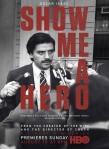 “
“David Simon, the creator of The Wire, returned to HBO with a six episode story he co-adapted with a fellow Baltimore journalist about the minutiae of the politics involved in constructing low-income housing in an middle-class, white Yonkers neighborhood from 1987 to 1994. The detail put into the scope of this story is crazy. In any other hands this might be considered boring. Maybe some people think it is (or expect it to be because Paul Haggis directed it). I would beg to differ. Please, let me differ.
Series:
 “The Leftovers” Season 2
Words don’t do this show justice. You could say that about anything, but the emotion put into this show; the sheer audacity of its attempt to encompass the feelings brought on by a range of characters within this conceit is impossible to convey concretely (what happens to us when 2% of the world’s population suddenly ‘departs’ the Earth in what some could term a “Rapture”?). The, um, departure, from Season 1 was noticeable immediately in the opening credits, but the creative ambiguity stayed consistently engaging (and at times overwhelming). No spoilers, but the end of this season left me pleasantly dumbfounded. I anxiously await the now confirmed final iteration and expect no definite answers or resolution. Reveling in the journey is enough.
Thanks for reading!




























 a matter of life and death


